
Restoration Guides
How to Remove Scratches from an Acrylic Aquarium
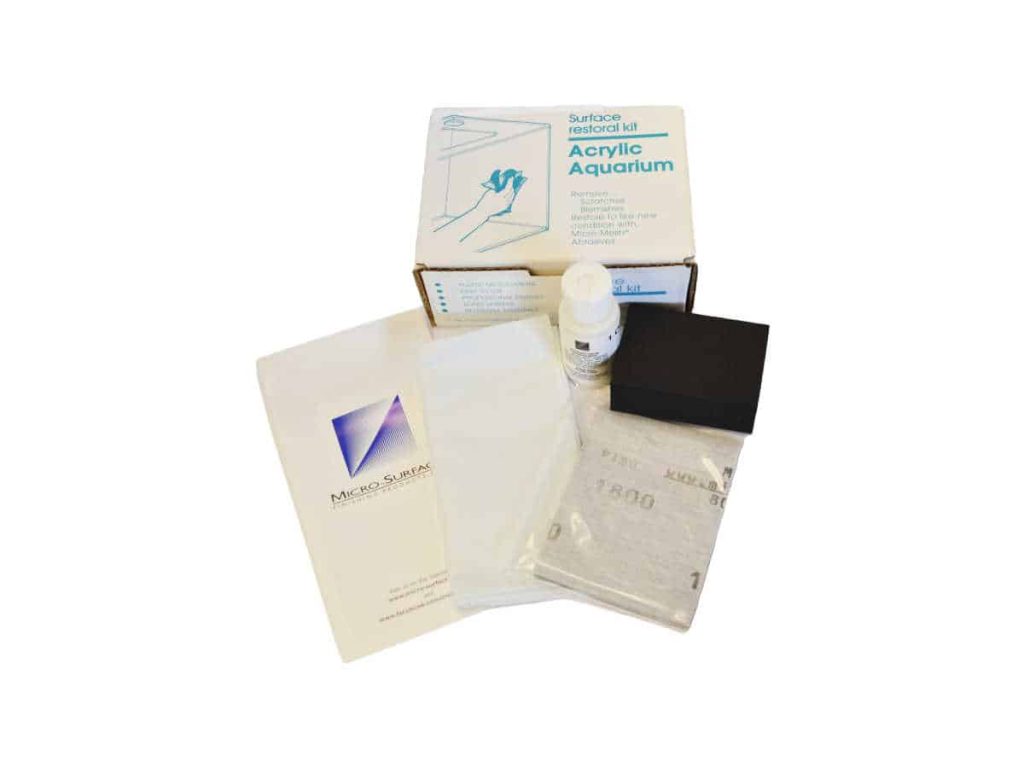
Acrylic aquariums are lighter and clearer than glass, but they scratch more easily. A grain of sand caught in an algae pad is enough. The upside is that acrylic can be polished, so scratches don’t have to be permanent.
Acrylic or glass?
This method is for acrylic tanks only. Glass tanks need a completely different approach. Acrylic tanks usually have rounded, seamless corners and sound duller when tapped.
Scratches on the outside
These are the easy ones. Clean the panel, then work through the grades of an acrylic aquarium restoration kit with water, finishing with the finest grade and a polish.
Scratches on the inside
Most aquarium scratches are on the inside, caused by cleaning. To work on them you usually need to lower the water level below the scratch, or empty the tank, so you are working on accessible acrylic. Plan it around a water change, rehouse livestock if needed, and follow the kit instructions carefully. Rinse the panel very thoroughly afterwards so no residue goes back into the water.
Preventing new scratches
- Use a cleaning pad made for acrylic, never one for glass.
- Keep the pad clear of sand and gravel.
- Clean in straight lines rather than circles.
See also: plastic and acrylic scratch removal.
Questions
Can I use this on a glass aquarium?
No. It is designed for acrylic. Glass is much harder and needs different methods.
Do I have to empty the tank?
For inside scratches, the water needs to be below the scratch so you can work on it. Outside scratches can be done at any time.
Is it safe for fish?
Rinse the panel very thoroughly before refilling so no abrasive residue or polish enters the water.
Clear acrylic, clear view.