
Restoration Guides
How to Restore Oxidised Gelcoat on a Boat
Gelcoat is the glossy outer layer on fibreglass boats. Sun, salt and time break down its surface, and it fades to a dull, chalky finish that rubs off on your hand. In most cases it can be brought back.
How bad is it?
- Light oxidation: the gloss has faded but the colour is even. A polish and wax is often enough.
- Moderate oxidation: chalky to the touch, colour looks washed out. Needs cutting back before polishing.
- Scratches and scuffs: need wet sanding to level them, then polishing.
What you need
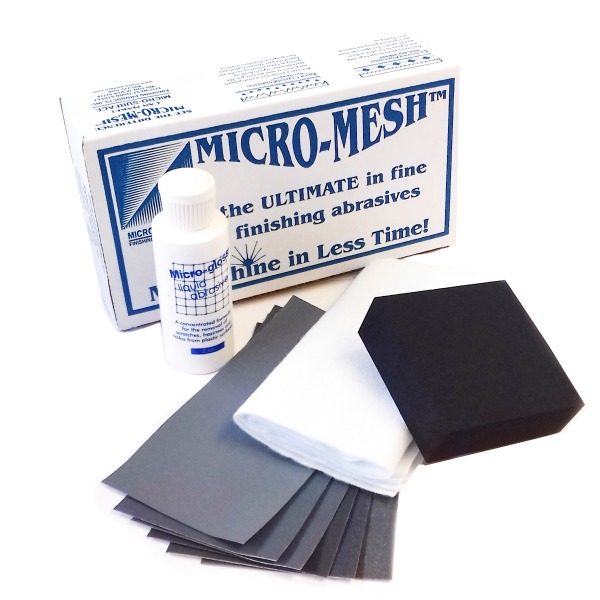
- A Micro-Mesh kit such as the Craft Kit for small areas, or Micro-Mesh sheets for larger ones
- A spray bottle of water
- A marine polish and marine wax
- Soft cloths
Step by step
- Wash the hull with a boat soap to remove salt and grime.
- Wet sand scratches with Micro-Mesh, starting with a grade just coarse enough to remove the mark. Work a small area at a time and keep it wet.
- Work through the finer grades until the area looks evenly smooth.
- Polish the whole area to bring back the gloss.
- Wax with a marine wax to protect the gelcoat from UV.
Don’t forget the fittings
While you are at it, brown tea-staining on stainless rails and cleats polishes off quickly with a steel polishing kit, and scratched acrylic hatches can be restored with a Clear Seas kit.
More in our boat gelcoat restoration guide.
Questions
Can badly faded gelcoat be saved?
Usually, yes, unless the gelcoat has worn through to the fibreglass. Heavy oxidation takes more cutting back and may need a machine polisher.
How often should I wax gelcoat?
At least once a season, more often for boats kept in strong sun.
Is Micro-Mesh safe on gelcoat?
Yes. Gelcoat is one of its most common uses. Work wet and go gently.
Everything for gelcoat, hatches and fittings.